|
Terameter's Room - looking at a sheet of graph paper
|
| galaxy | | 21 |
 |
| | 20
19 |
| local stars | 18 |
 |
| | 17
16 |
| between | 15 |
|
| | 14
13 |
| E's orbit | 12 |
 |
| | 11
10 |
| sun | 9 |
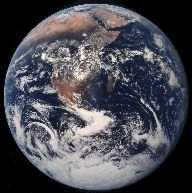 |
| | 8
7 |
| texas | 6 |
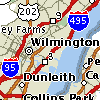 |
| | 5
4 |
| hood | 3 |
 |
| | 2
1 |
| you | 0 |
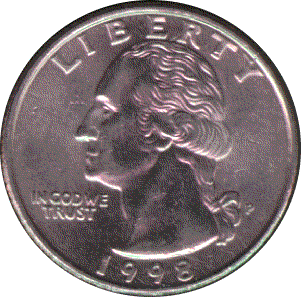 |
| | -1
-2 |
| salt grain | -3 |
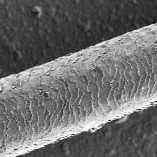 |
| | -4
-5 |
| bacteria | -6 |
 |
| | -7
-8 |
| atom | -9 |
1012 m  1 Tm
1 Tm
1013 m 10 Tm
1014 m 100 Tm
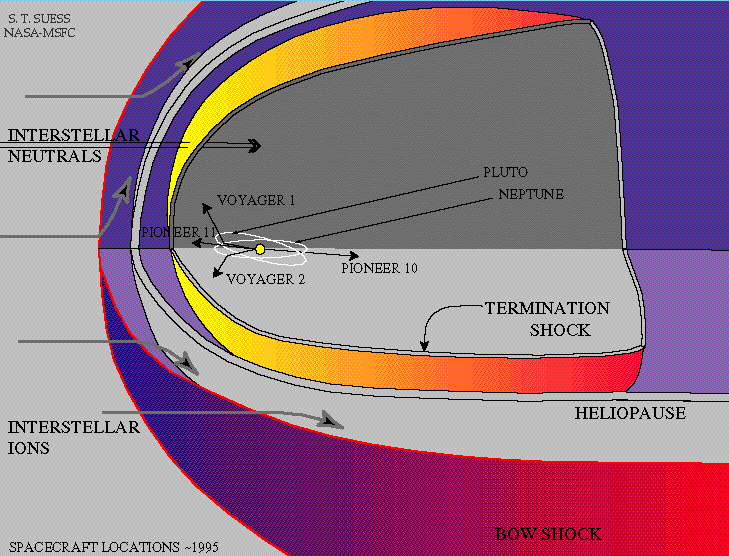
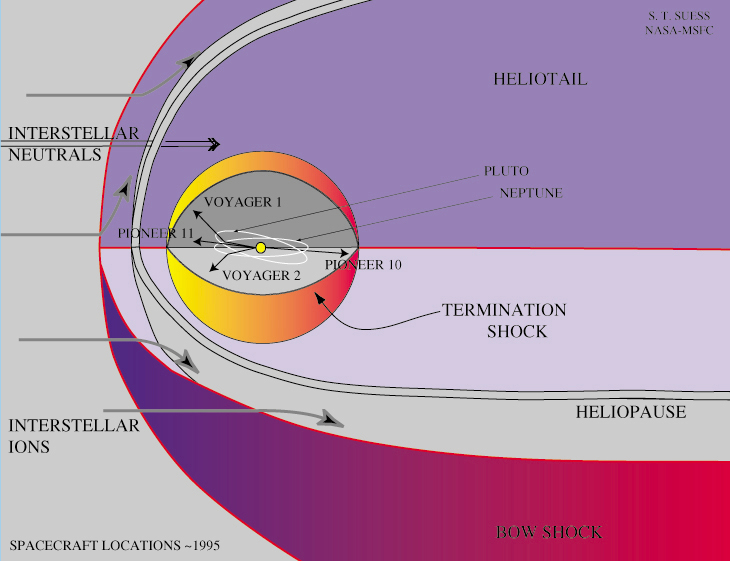
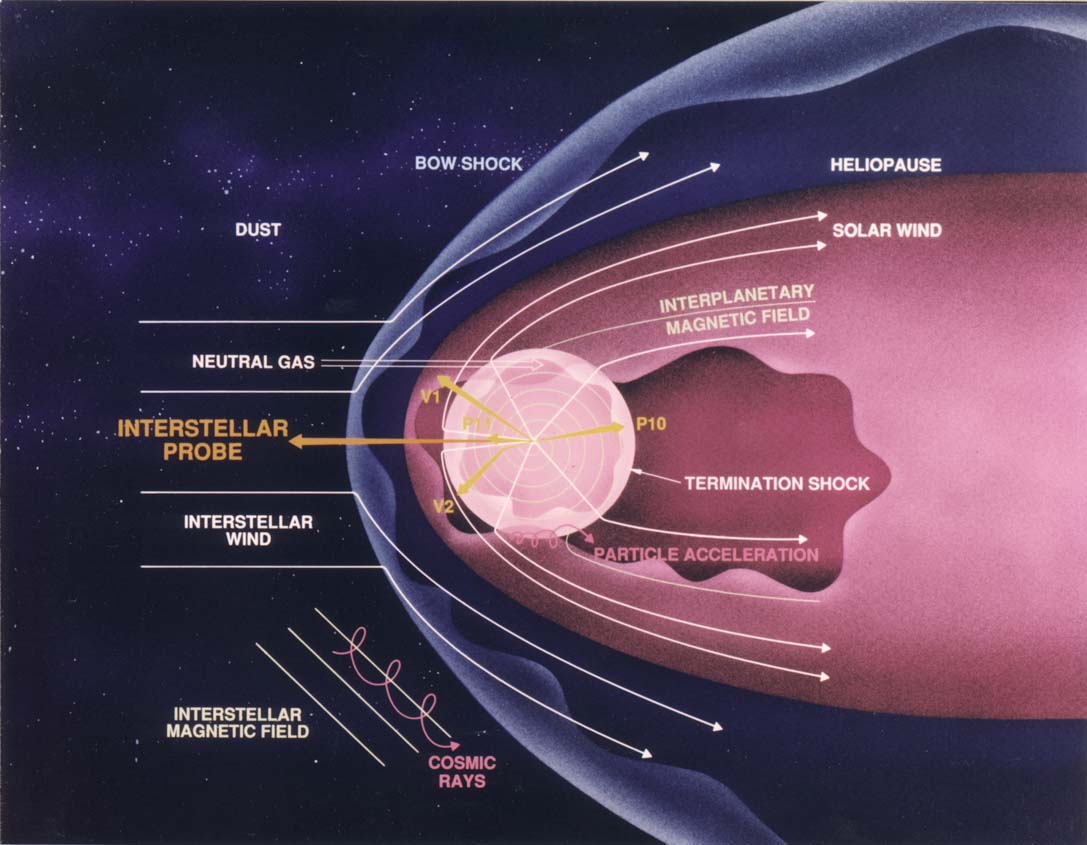
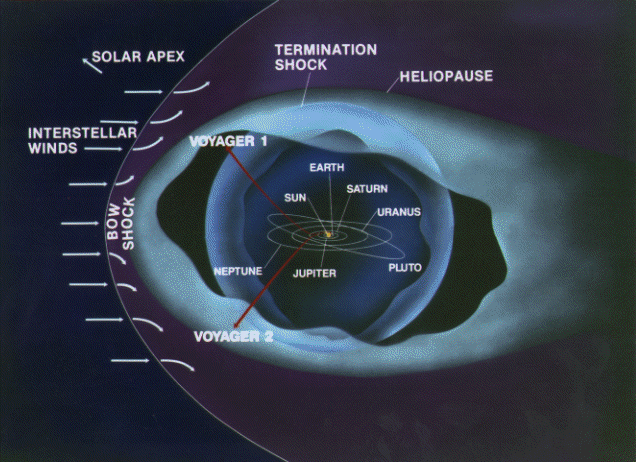
Our solar system is in an interstellar cloud blowing by (diagrams in Petapaper).
The Sun itself blows outward. This solar wind pushes back on the interstellar cloud,
forming a bubble. This heliosphere bubble leaves a wake in the intersellar cloud.
 Neptune's orbit

 src
src
|
light-days
|
0
|
1
|
2
|
3
|
4
|
5
|
6
|
7
|

(c) 2000-2003 Mitchell N Charity. All rights reserved.
Noncommercial use is fine. Otherwise, ask.